

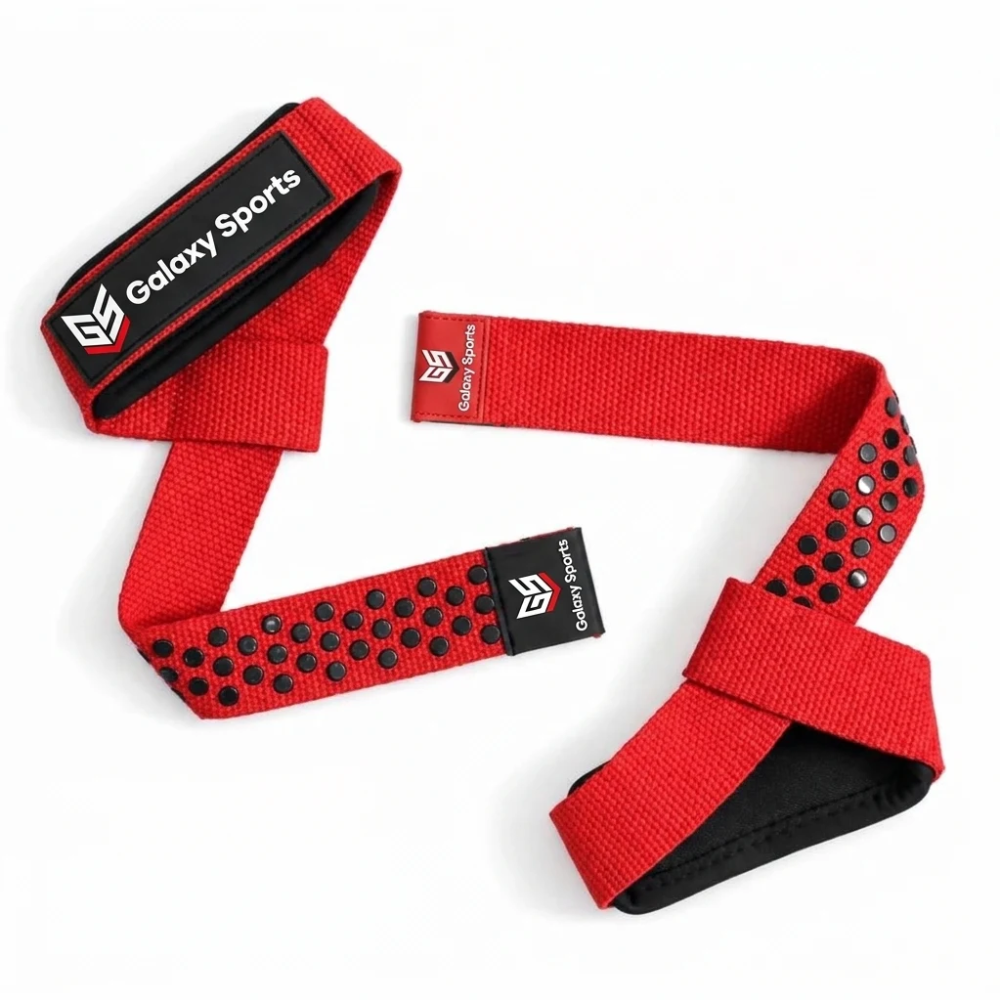
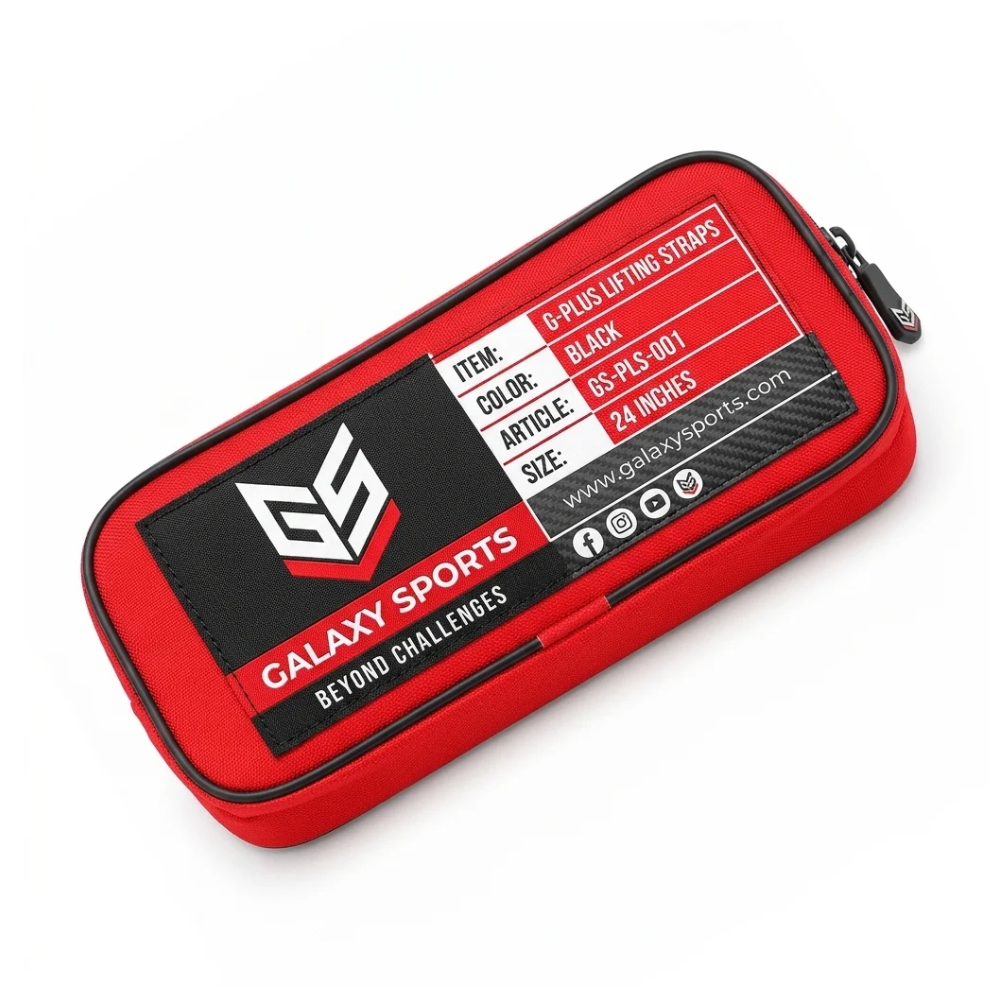

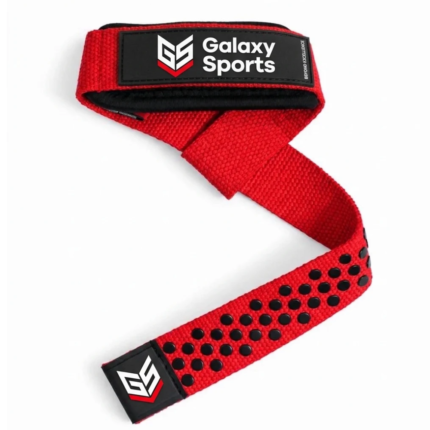
Pro Grip Lifting Straps – Heavy Duty Gym Wrist Straps for Deadlifts & Pull-Ups are made for lifters who find that their grip fails before the target muscles do. On heavy pulling movements, forearm and finger strength is often the limiting factor. These straps wrap the bar to your wrist, so you can keep training your back, traps, and posterior chain through the full set.
Purpose and use
Lifting straps are a training accessory for exercises where the bar is pulled or hung from. They are commonly used for deadlifts, Romanian deadlifts, barbell and dumbbell rows, shrugs, lat pulldowns, and pull-ups. By reducing the demand on the grip, they let you complete heavier working sets or higher rep ranges with better focus on the muscles you are trying to build. They are a gym accessory, not a medical device, and they do not treat or prevent injury.
How lifting straps work
The strap is looped around the wrist, then threaded and wrapped around the bar. As you pull, the wrap tightens and locks the bar against your palm, which transfers some of the load from your fingers to your wrist and forearm. This is why a good strap needs a secure wrist loop, a grippy surface, and a length that allows several tight wraps.
Design features
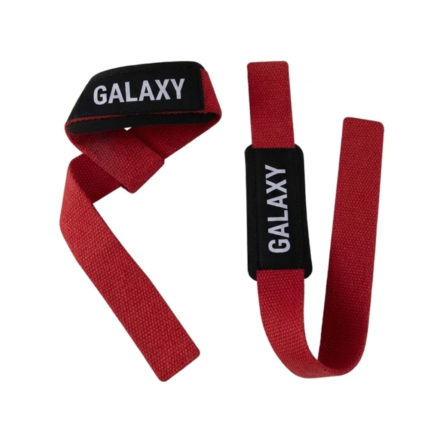
Each strap has a sewn wrist loop, often padded with neoprene or similar cushioning, and a long tail that wraps around the bar. The padded section helps reduce pressure on the wrist and forearm during heavy sets. A textured or non-slip strap surface keeps the wrap from sliding on knurled bars. Reinforced stitching at the loop and tail supports repeated heavy use. Check the product page for exact length and width, since longer straps allow more wraps and a firmer lock.
Material benefits
Heavy duty straps are typically made from woven cotton, nylon, or a cotton-blend webbing that resists stretching. Cotton gives a natural, grippy feel on the bar, while nylon is smoother and tends to be more resistant to wear and moisture. Neoprene padding adds comfort and absorbs sweat. Quality webbing keeps its width under load and resists fraying at the edges.
Usability
Using straps takes a short learning curve. Slide your hand through the loop, position the tail under the bar, wrap it around two to three times, and tighten by rolling the bar toward you. Practice with lighter weights first. Keep your wrists neutral and use controlled technique, and avoid wrapping so tightly that circulation is restricted. Straps are best used on your heaviest sets, so you keep building natural grip strength on lighter work.
Care and maintenance
Hand wash with mild soap and cold water, or machine wash on a gentle cycle in a laundry bag. Air dry away from direct heat. Chalk, sweat, and gym dust can build up on the webbing, so regular cleaning keeps the surface grippy and prevents odor. These straps are reusable and not suitable for autoclave or medical sterilization.
Durability
Reinforced stitching, quality webbing, and a secure wrist loop help the straps hold up to heavy and frequent use. Inspect them before each session. Replace straps showing frayed webbing, loose stitching, or a stretched loop, because a failing strap can cause the bar to drop unexpectedly.
Who should buy
These straps suit bodybuilders, powerlifters, CrossFit athletes, strength trainers, and anyone training back, traps, and hamstrings with heavy loads. They are a practical addition to a gym bag for both beginners moving up in weight and experienced lifters chasing volume.
Key Features
- Heavy duty gym wrist straps for deadlifts, rows, shrugs, and pull-ups
- Padded wrist loop for comfort during heavy sets
- Non-slip strap surface for a secure bar wrap
- Reinforced stitching for long-term durability
- Long tail for multiple wraps and a firm lock
- Reduces grip fatigue so back and leg training can go further
- Durable webbing that resists stretching and fraying
- Neoprene-style cushioning to absorb sweat and reduce pressure
- Universal fit for men and women
- Works with barbells, dumbbells, and pull-up bars
- Lightweight and easy to carry in a gym bag
- Sold as a pair for both hands
Product Specifications
| Specification | Details |
|---|---|
| Product Type | Pro Grip Lifting Straps (Heavy Duty Gym Wrist Straps) |
| Application | Deadlifts, rows, shrugs, pull-ups, and heavy pulling exercises |
| Material | Woven cotton or nylon webbing with padded wrist loop (confirm exact material) |
| Finish | Textured non-slip surface, reinforced stitching |
| Sterilization | Not applicable (not autoclavable; hand wash or gentle machine wash) |
| Reusability | Reusable |
| Specialty | Padded wrist loop, long wrap tail, heavy duty stitching |
| Instrument Type | Fitness accessory (not a surgical instrument or medical device) |
| Usage | Strength training, powerlifting, bodybuilding, and CrossFit |
| Product Contents | 1 pair (2 straps) of Pro Grip Lifting Straps |
Applications
- Conventional and sumo deadlifts
- Romanian and stiff-leg deadlifts
- Barbell, dumbbell, and cable rows
- Barbell and dumbbell shrugs
- Pull-ups, chin-ups, and hanging leg raises
- Lat pulldowns and heavy cable work
- Powerlifting and strongman training
- Bodybuilding, CrossFit, and general strength programs
FAQs
1. What are lifting straps used for?
Lifting straps secure the bar to your wrists so grip fatigue does not stop a set early. They are used on deadlifts, rows, shrugs, and pull-ups.
2. Are lifting straps good for deadlifts?
Yes. Deadlifts are often limited by grip strength, so straps let you train your back and legs with heavier loads. Many lifters use them only on top sets and train grip separately.
3. Can I use lifting straps for pull-ups?
Yes. Straps help you hang from the bar when your hands tire before your lats do. Use controlled technique and a secure wrap, and avoid kipping or sudden drops while strapped in.
4. Will lifting straps weaken my grip strength?
Straps reduce grip demand, so relying on them for every set can slow grip development. A common approach is to train without straps on warm-ups and lighter sets, and use them for heavy work.
5. How do I put on lifting straps?
Pass your hand through the loop, run the tail under the bar, wrap it around two to three times, then roll the bar toward you to tighten. Practice with light weight first.
6. Are lifting straps better than lifting hooks or gloves?
It depends on your goals. Straps are lightweight, adjustable, and widely used for heavy pulls. Hooks and gloves feel different and suit certain preferences. Choose based on comfort and the exercises you do.
7. How do I clean and care for lifting straps?
Hand wash with mild soap and cold water, or use a gentle cycle in a laundry bag, then air dry. Replace them if the stitching loosens or the webbing frays.






Reviews
There are no reviews yet.